Pulled in Every Direction: The Women Holding Their Families Together While Falling Apart Inside
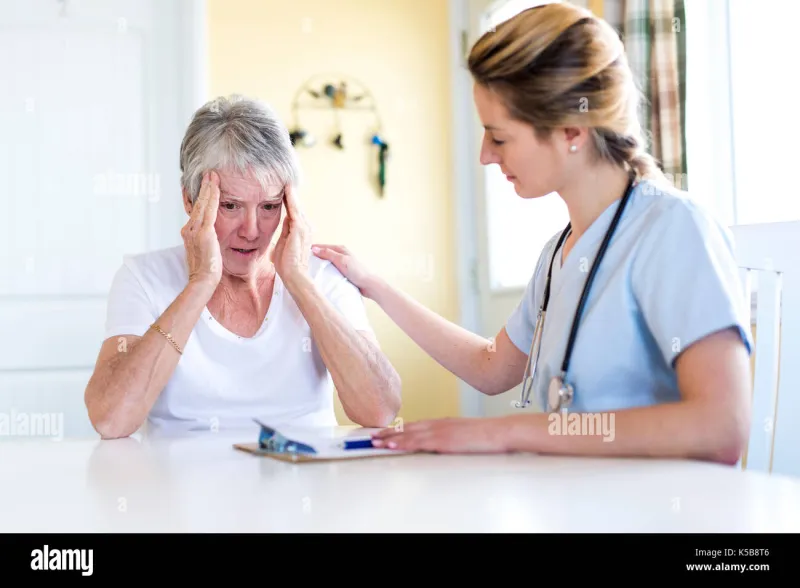
Photo: exhausted middle aged woman caring for elderly parent at home UK, via c8.alamy.com
Picture this. It's 3am. You're awake — again — drenched in sweat, heart racing, mind cycling through tomorrow's to-do list. You need to ring the district nurse about your mother's medication. You need to chase the council about the care assessment that was supposed to happen six weeks ago. You need to somehow function at work in five hours. And somewhere in all of this, you're supposed to be looking after yourself.
This is the reality for a significant and growing number of women in their late forties and fifties. They sit at the intersection of two enormous life events — their own menopause transition and the escalating care needs of ageing parents — and they do it largely without acknowledgement, without adequate support, and often without even the language to describe what's happening to them.
They are the sandwich generation. And they are exhausted.
The Numbers Behind the Pressure
The term 'sandwich generation' — caught between the needs of children and the needs of ageing parents — has been in circulation for decades. But the demographic reality has shifted. Women who are now in perimenopause or full menopause are the same women who delayed having children, who are living longer, and whose parents are living longer still — often with complex health needs that require significant hands-on support.
According to Carers UK, around 2.6 million people in the UK have had to reduce their working hours or leave employment altogether to care for a loved one. Women make up the majority of unpaid carers, and the peak caregiving years sit squarely in the same window as perimenopause and menopause.
These aren't separate issues happening to the same women. They interact. They amplify each other. And yet in most conversations about menopause — in GP surgeries, in the media, in workplace policies — the caring context is almost entirely absent.
Two Crises, One Body
The physical symptoms of menopause are well documented: disrupted sleep, joint pain, cognitive changes, fatigue, anxiety, and more. What's less discussed is what happens to those symptoms when you're simultaneously carrying the weight of someone else's care.
Sleep deprivation, for instance, is already one of the most debilitating aspects of menopause. Add in the interrupted nights that come with caring for a parent who has dementia, incontinence, or chronic pain, and the cumulative effect on physical and mental health can be severe.
Brain fog — the frustrating cognitive haziness that many menopausal women report — becomes particularly dangerous when you're the person responsible for managing medication schedules, coordinating with NHS teams, and making complex decisions about another person's welfare.
"I used to be the organised one," says Janet, 54, from Manchester, who has been caring for her mother with vascular dementia for three years while managing her own perimenopause. "I'd always been the person who remembered everything. And then suddenly I couldn't finish sentences. I'd lose track of what I was saying mid-conversation. I was terrified I had dementia too. It took a long time to connect it to my hormones."
The emotional weight compounds everything. Grief — anticipatory grief for a parent who is still alive but no longer the person you knew — is a profound and often unacknowledged part of the caring experience. Layered onto the mood changes and emotional volatility that can accompany menopause, it can become genuinely overwhelming.
"I cried in the car every single day for about eight months," says Fiona, 51, from Glasgow, who cared for her father through the final stages of Parkinson's disease. "I didn't know if I was crying because of Dad or because of my hormones or because I was just completely at the end of my rope. Probably all three. There was nobody to ask."
The Support That Exists (Even If Nobody Tells You)
One of the most consistent frustrations among women in this position is the sense that they've had to find support entirely by themselves — that neither the healthcare system nor the social care system proactively joined the dots for them.
Here's what's available, and how to access it:
Carers UK (carersuk.org) is the starting point for most unpaid carers. Their helpline (0808 808 7777) offers free advice on benefits, assessments, and local services. They also run online forums that many women describe as a lifeline.
A carer's assessment from your local council is a legal right — it's separate from the needs assessment carried out for the person you care for, and it's designed to look at your own wellbeing and what support you need. Many carers don't know this exists. You can request one directly from your local authority's adult social care team.
GP registration as a carer — many surgeries have a carers register that can unlock additional support, longer appointment times, and signposting to local services. Ask your practice directly if this is something they offer.
Carers Trust (carers.org) has a network of local partner organisations offering practical support, respite care, and emotional support groups across the UK.
For menopause-specific support running alongside caring responsibilities, the Menopause Support charity and the British Menopause Society's patient resources are worth bookmarking. And if your GP isn't connecting your symptoms to your hormones — ask directly. You're entitled to that conversation.
What These Women Want You to Know
Ask women who've been through this what they wish someone had told them, and the answers are remarkably consistent.
They wish someone had told them that what they were experiencing had a name. That the particular combination of exhaustion, grief, hormonal chaos, and invisible labour they were carrying was real and recognised, even if rarely discussed.
They wish someone had told them that getting their own menopause treatment — whether that's HRT, CBT, or other support — wasn't selfish. That you cannot pour from an empty cup is a cliché for a reason.
And they wish someone had told them to ask for help sooner. Not to wait until crisis point. Not to keep managing because that's what women do.
"I kept thinking I'd get through this bit and then I'd deal with me," says Janet. "But there was always another bit. I had to accept that my health wasn't something I could defer. I had to matter too."
If you're reading this and recognising yourself in any of it: you matter too. Your menopause is real. Your exhaustion is valid. And you don't have to hold all of this alone.