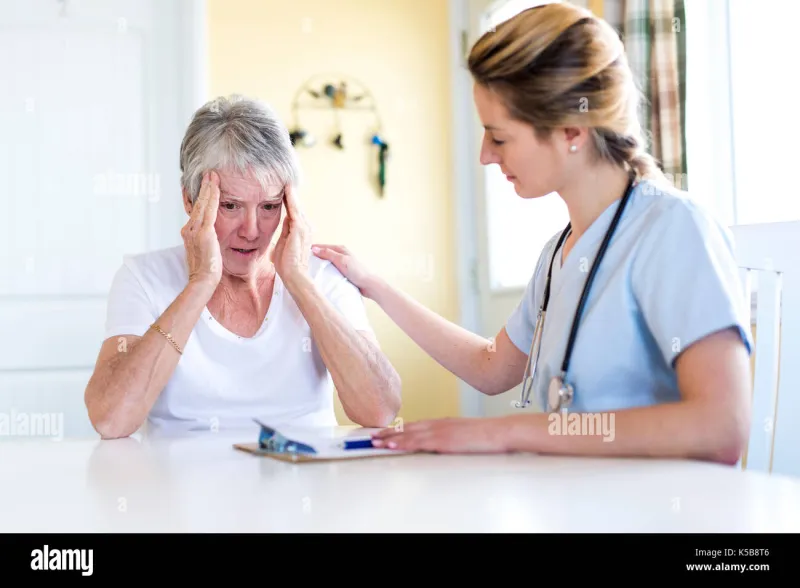
Rushed Through A&E with a Racing Heart — and Nobody Mentioned Menopause

Photo: Nenad Stojkovic, CC BY 2.0, via Wikimedia Commons
Linda was 47 when she called 999 for the first time in her life. Her heart was hammering so hard she could see it through her shirt. Her left arm felt strange. She was sweating through her clothes in January. By the time the paramedics arrived, she was convinced she was having a heart attack.
She wasn't. After four hours in the emergency department at her local hospital in Sheffield, a battery of tests, and a very long wait, she was told her heart was fine. No cardiac event. No structural abnormality. She was sent home with a leaflet about anxiety management.
"Nobody mentioned menopause," she says. "I was 47. I'd been having irregular periods for about eight months. But nobody asked. And I didn't know enough to say it myself."
Linda's experience is not unusual. It is, in fact, depressingly common — and it represents one of the most overlooked failures in how the NHS responds to women in midlife.
The Symptoms That Send Women to A&E
Menopause is still widely understood as a condition defined by hot flushes and the end of periods. In reality, its symptom profile is vast, varied, and — crucially — frequently mimics conditions that are considered medical emergencies.
Heart palpitations are among the most common reasons menopausal women end up in emergency departments. Oestrogen plays a significant role in cardiovascular regulation, and as levels fluctuate, many women experience episodes of rapid, irregular, or forceful heartbeats that are genuinely alarming. The physical sensation is often indistinguishable from a cardiac arrhythmia.
Then there are the neurological symptoms. Menopause can cause tingling or numbness in the hands and feet, episodes of dizziness and vertigo, sudden cognitive confusion, and in some cases, visual disturbances. These symptoms, presenting in a woman who doesn't connect them to hormonal changes, can look — to her and to attending clinicians — like a transient ischaemic attack (TIA) or the onset of multiple sclerosis.
Severe anxiety and panic attacks are another major driver of emergency presentations. Menopause-related anxiety can be sudden, extreme, and utterly disconnected from any obvious psychological trigger. Women who have never experienced mental health difficulties find themselves unable to breathe, convinced something catastrophic is happening to them.
"I've spoken to women who've had full neurological workups, multiple ECGs, MRI scans — all because nobody in the system connected what they were experiencing to perimenopause," says Dr. Rachel Patel, a consultant physician with an interest in women's health. "The cost to the NHS is significant. But the cost to the women — in terms of fear, delay, and misdiagnosis — is even greater."
What Happens in the Room
Emergency departments are designed to rule out the dangerous stuff first. That is, of course, exactly what they should do. When a woman presents with chest pain and palpitations, the right response is to check her heart. When she presents with neurological symptoms, the right response is to rule out stroke.
The problem comes after the tests come back clear. At that point, in a busy A&E department under enormous pressure, the conversation often ends. Anxiety is noted. A GP follow-up is recommended. The patient goes home frightened, undiagnosed, and no closer to understanding what's happening to her body.
"I went to A&E three times in six months," says Priya, 49, from Leicester. "Each time, my heart was fine. Each time, I was told it was probably stress. Each time, I left feeling like I was making it up. It was only when I paid to see a private menopause specialist that someone finally looked at the whole picture and said — this is perimenopause. I cried with relief."
The issue is not that A&E doctors are dismissive or incompetent. The issue is systemic. Emergency medicine training does not routinely include menopause awareness. There is no standard protocol prompting clinicians to consider hormonal causes when a woman in her mid-to-late forties presents with certain symptom patterns. And the time pressures of a stretched NHS emergency department do not naturally lend themselves to the kind of holistic, history-taking conversation that might surface a hormonal explanation.
The Age Assumption Problem
There's a deeper issue, too — one that intersects with longstanding problems around how medicine treats women's bodies.
Cardiac events in women are already systematically underdiagnosed. Women present differently from men during heart attacks, and research consistently shows they receive less timely treatment. Layered on top of this is an age assumption problem: menopause is still culturally associated with women in their early-to-mid fifties, meaning that a woman of 44 presenting with palpitations is less likely to have hormonal causes considered, even though perimenopause can begin a decade or more before the final period.
Some women are even younger. Premature ovarian insufficiency (POI) affects around one in a hundred women under 40. For these women, the gap between their age and the cultural stereotype of menopause is even wider — and the chance of a hormonal explanation being raised in an emergency setting is correspondingly smaller.
What Better Looks Like
A handful of NHS trusts are beginning to address this. Some hospitals have introduced menopause awareness training as part of wider women's health initiatives, and a small number of emergency departments have developed prompts within their triage systems to flag potential hormonal causes in women of perimenopause age.
But these are isolated examples, not system-wide change. The Royal College of Emergency Medicine does not currently include menopause as a specific area of focus in its core training curriculum — though campaigners are pushing for that to change.
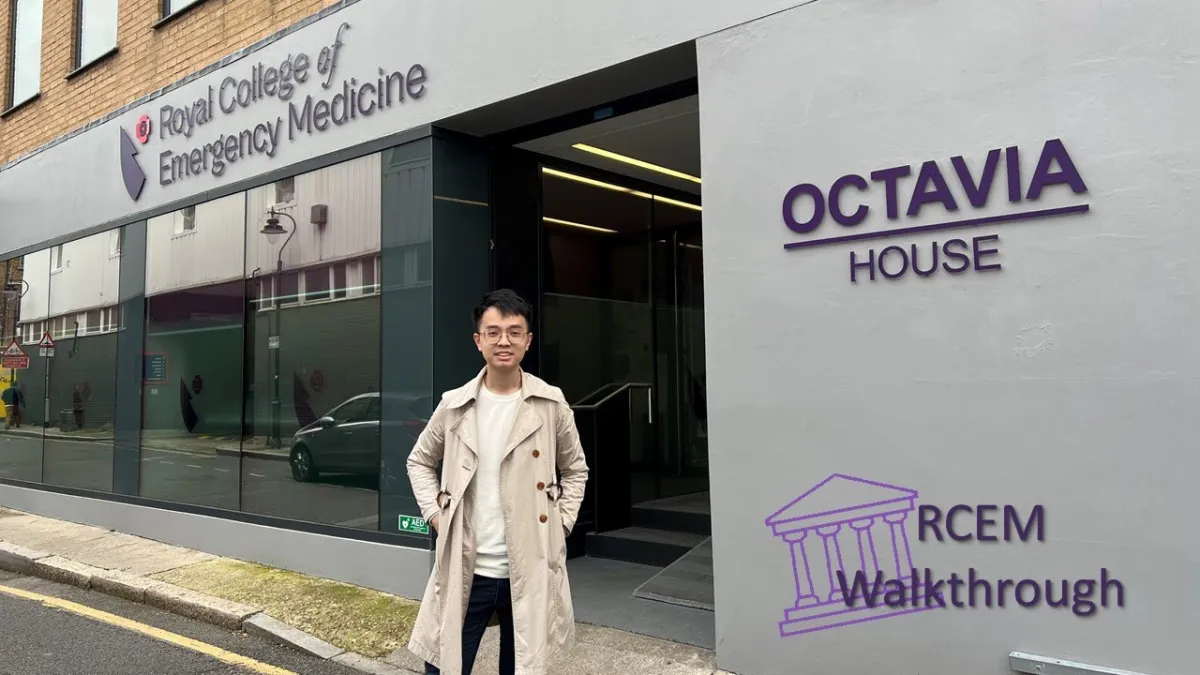 Photo: Royal College of Emergency Medicine, via i.ytimg.com
The Menopause Charity and other advocacy organisations have called for a national standard requiring all emergency department staff to receive basic menopause awareness training. The ask is relatively modest: not that A&E doctors become menopause specialists, but that they have enough awareness to consider hormonal causes as part of a differential diagnosis, and enough knowledge to refer appropriately when the acute emergency has been ruled out.
"It wouldn't take much," says Dr. Patel. "A simple prompt. A question about menstrual history. An awareness that these symptoms can be hormonal. That's all it would take to change the experience for so many women."
What You Can Do Right Now
If you're experiencing symptoms that might be menopause-related, there are things you can do to help yourself in a medical encounter — even a rushed one.
Keep a symptom diary. Documenting when symptoms occur, alongside your menstrual history, gives any clinician a much clearer picture. If you're attending A&E, mention your age and your menstrual cycle status explicitly, even if nobody asks. Say: "I'm 48, my periods have been irregular for the past year, and I want to make sure menopause has been considered."
And if you're sent home with a clean bill of cardiac or neurological health but no explanation for what you experienced — push for a GP follow-up that specifically addresses hormonal causes. You deserve an answer that makes sense of what you felt.
Linda from Sheffield eventually got that answer, eighteen months and two more A&E visits later. She's now on HRT and hasn't had a palpitation episode in over a year. "I'm not angry at the doctors," she says carefully. "They were doing their job. I'm angry at a system that doesn't train people to see us properly. We deserve better than that."