Loose Teeth, Bleeding Gums, and a Dentist Who Blamed Your Brushing: The Oral Health Crisis Hiding in Plain Sight
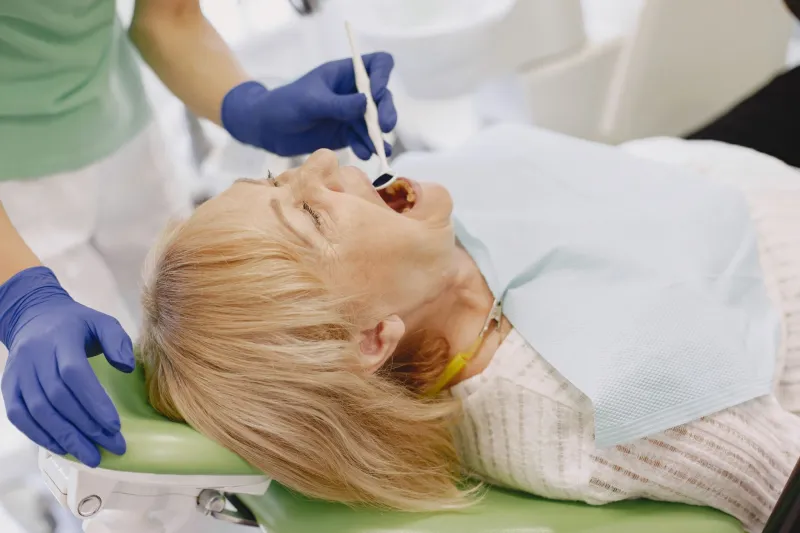
Sarah, 51, had always been meticulous about her teeth. Electric toothbrush, twice-daily flossing, regular hygienist appointments — the works. So when her gums started bleeding every time she ate an apple, and her dentist suggested she needed to "improve her oral hygiene routine," she was baffled.
"I was doing everything right," she says. "I felt like I was being told off for something that wasn't my fault. It wasn't until I mentioned it to a friend who'd just started HRT that the penny dropped. Nobody — not my GP, not my dentist — had ever connected it to perimenopause."
Sarah's experience is far from unusual. Across the UK, women in their forties and fifties are quietly dealing with a cluster of dental problems that seem to appear from nowhere: sore, swollen, or receding gums; teeth that suddenly feel loose or have shifted position; a dry, burning sensation in the mouth; even tooth loss. And in the vast majority of cases, the hormonal connection goes completely unacknowledged.
Why Oestrogen Matters More Than Your Toothbrush
Here's the thing about oestrogen that most of us were never taught: it doesn't just regulate your periods and keep hot flushes at bay. It plays an active role in maintaining the health of your gum tissue, the density of your jawbone, and the moisture levels throughout your mouth.
When oestrogen levels begin to decline during perimenopause, the tissues in your mouth become more vulnerable to inflammation. The gums — already a sensitive ecosystem — lose some of their resilience. Blood flow to the gum tissue can decrease. Saliva production often drops, which matters enormously because saliva is your mouth's first line of defence against bacteria.
Dr. Priya Thakur, a periodontist based in London who has spent years researching the link between hormones and gum disease, explains it plainly: "Oestrogen has an anti-inflammatory effect on gum tissue. When it drops, the gums become more reactive to the bacteria that are always present in the mouth. You can have the same bacteria load you've had for years, but suddenly your gums are responding to it very differently. Women aren't doing anything wrong — their biology has changed."
This shift can accelerate the progression of periodontitis — a serious form of gum disease that, left untreated, leads to bone loss around the teeth and, ultimately, tooth loss itself. Research published in the journal Menopause has found that postmenopausal women who are not on hormone replacement therapy show significantly higher rates of tooth loss than those who are — a finding that rarely makes it into mainstream dental conversations.
The Bite That Moved When You Weren't Looking
Beyond the gums, many women report something that sounds almost impossible: their teeth seem to have moved. Their bite feels different. A filling that fitted perfectly now catches. A gap has appeared where there wasn't one before.
This isn't imagined, and it isn't trivial. The jawbone itself is subject to the same bone density loss that affects the rest of the skeleton during menopause. As bone around the tooth roots becomes less dense, teeth can shift — sometimes subtly, sometimes significantly. For women who had orthodontic work in their younger years, this can be particularly distressing.
Julie, 54, from Manchester, noticed her front teeth had started to splay outward. "I thought I was losing my mind. I'd had a brace as a teenager and my teeth were perfectly straight for thirty years. Then suddenly, in my early fifties, they started spreading apart. My dentist referred me to an orthodontist, but no one mentioned menopause until I brought it up myself."
The dry mouth that often accompanies hormonal changes — known clinically as xerostomia — compounds all of these problems. Without adequate saliva, the mouth's ability to neutralise acids and wash away food debris is compromised, leaving teeth more vulnerable to decay and erosion.
The Burning Question
There's another symptom that doesn't get nearly enough airtime: burning mouth syndrome. It's exactly what it sounds like — a persistent burning or scalding sensation in the mouth, often affecting the tongue, lips, or the roof of the mouth, with no obvious physical cause. It can be relentless, affecting eating, speaking, and sleep.
Burning mouth syndrome disproportionately affects perimenopausal and postmenopausal women, and while the exact mechanism isn't fully understood, the hormonal connection is well-established. It can be mistaken for a fungal infection, an allergy, or even anxiety — and many women spend months or years cycling through ineffective treatments before anyone makes the menopause connection.
What You Can Actually Do
The good news — and there genuinely is some — is that once the hormonal dimension is understood, there are practical steps that make a real difference.
Talk to your GP about HRT. Evidence suggests that hormone replacement therapy may help protect against bone loss in the jaw and reduce gum inflammation. It won't reverse existing damage, but it may slow progression. If HRT is appropriate for you, the dental benefits are worth factoring into the conversation.
Be honest with your dentist. If you're perimenopausal or postmenopausal, say so. Ask them to factor your hormonal status into their assessment. A good dentist will adjust their approach — more frequent hygienist appointments, closer monitoring for bone changes, targeted advice on saliva substitutes if dry mouth is an issue.
Increase your hygienist visits. During menopause, six-monthly check-ups may not be frequent enough. Many women benefit from three or four-monthly professional cleaning during this period, particularly if there are signs of gum disease.
Address dry mouth directly. Alcohol-free mouthwashes, fluoride toothpaste designed for dry mouth, and staying well-hydrated all help. Avoid alcohol and caffeine where possible, as both worsen dehydration.
Ask about vitamin D and calcium. Both support bone density, including in the jaw. Your GP can check your levels and advise on supplementation if needed.
Don't accept "brush better" as an answer. If you're doing everything right and still experiencing symptoms, push for a referral to a periodontist. You deserve a proper investigation, not a brushing tutorial.
The Bigger Picture
The fact that so many women are navigating these changes without the information they need is, frankly, a failure. Dentists aren't typically trained to ask about menopause. GPs rarely think to mention oral health when discussing hormonal changes. And women — already dealing with a dozen other symptoms — often assume their dental problems are just another sign of ageing rather than something connected and, importantly, manageable.
Your mouth is part of your body. What's happening hormonally is happening everywhere — and that includes behind your teeth. You're not brushing badly, you're not imagining it, and you're not alone. The first step is knowing what you're dealing with. The second is refusing to accept a dismissal.
Because your smile is worth fighting for.