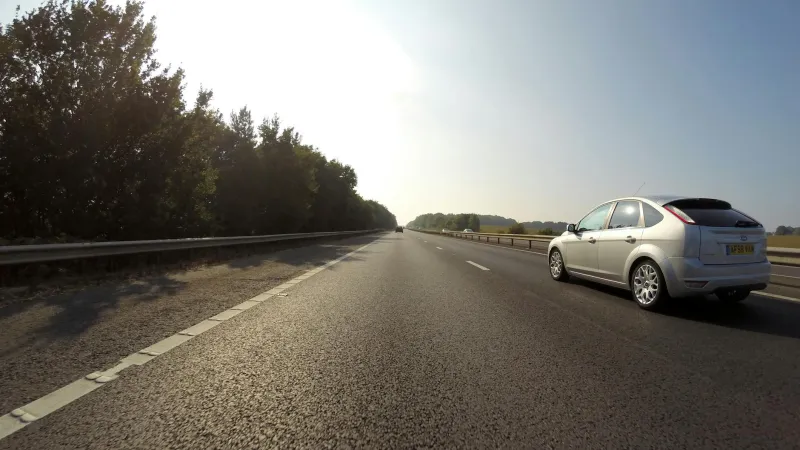
The Silent Retreat from the Road
Sarah's hands were shaking as she pulled into the services on the M40. Not from nerves, but from the wave of heat that had just crashed over her, leaving her drenched in sweat and struggling to focus on the road ahead. "I used to drive anywhere without thinking twice," she tells me. "Now I plan my routes around where I can stop if I need to cool down or clear my head."
Sarah isn't alone. Across the UK, women in their forties and fifties are quietly reshaping their relationship with driving as menopause symptoms create unexpected challenges behind the wheel. Yet this phenomenon remains largely invisible – absent from public health discussions, driving safety campaigns, and even conversations between women themselves.
When Your Body Becomes the Co-Pilot
The statistics are telling. According to recent research by the Institute of Advanced Motorists, women over 45 are increasingly likely to avoid motorway driving, with 34% citing "confidence issues" as their primary concern. But scratch beneath the surface, and a different picture emerges.
"We're seeing women report difficulties with concentration, sudden temperature changes, and what they describe as 'feeling overwhelmed' whilst driving," explains Dr Rachel Morrison, a GP specialising in menopause care. "These aren't character flaws or signs of ageing – they're direct consequences of fluctuating hormones affecting everything from our cognitive function to our body's temperature regulation."
Brain fog, perhaps the most insidious of menopause symptoms, can turn a familiar journey into a navigation nightmare. Lisa, 52, describes missing her junction on the M6 three times in one month. "I'd driven that route for years, but suddenly I couldn't hold the directions in my head. I started questioning whether I was safe to drive at all."
The Hot Flush Highway
Then there are the hot flushes – those sudden surges of heat that can strike without warning. At 70mph on a busy motorway, they're not just uncomfortable; they're potentially dangerous.
"Imagine trying to concentrate on merging lanes whilst feeling like you're being roasted alive," says Emma, who now avoids the M25 entirely. "Your clothes stick to you, your vision gets blurry from sweat, and all you want to do is rip off your jacket. It's not exactly conducive to safe driving."
The Royal Society for the Prevention of Accidents acknowledges that "sudden physical discomfort" can impair driving ability, but their guidance makes no specific mention of menopause-related symptoms. It's a glaring omission for something affecting half the population.
The Anxiety Accelerator
Anxiety, another common menopause companion, can transform confident drivers into nervous passengers in their own cars. The combination of hormonal fluctuations and sleep deprivation creates a perfect storm for heightened stress responses.
"I used to love long drives – they were my thinking time," shares Helen, 48. "Now the thought of being stuck in traffic on the M4 with nowhere to escape fills me with dread. I've started taking the back roads everywhere, even if it takes twice as long."
Dr Morrison notes that this anxiety often becomes self-perpetuating. "Women start avoiding certain driving situations, which reinforces their fears and further limits their confidence. It's a cycle that can significantly impact their independence and quality of life."
The Practical Reality Check
So what can be done? First, we need to acknowledge that these challenges are real and valid. Too many women are suffering in silence, convinced they're "just getting old" or "being silly".
Practical strategies can help. Keeping the car well-ventilated, planning routes with regular stops, and avoiding peak traffic times when possible are all sensible adaptations. Some women find that scheduling longer journeys for times when their symptoms are typically milder makes a significant difference.
"I've learned to listen to my body," says Sarah. "If I'm having a particularly foggy day, I don't attempt the motorway. It's not giving up; it's being smart."
The Technology Lifeline
Modern technology offers additional support. Sat-nav systems can compensate for memory lapses, whilst climate control helps manage temperature fluctuations. Some women invest in cooling accessories specifically for driving – from cooling towels to portable fans.
But technology alone isn't the answer. We need healthcare providers to include driving safety in menopause consultations, and driving instructors to understand how hormonal changes might affect their older female clients.
Breaking the Silence
The most crucial step is starting the conversation. When women understand that their driving difficulties might be hormone-related, they can seek appropriate support rather than simply accepting limitations.
"Knowledge is power," emphasises Dr Morrison. "Once women understand what's happening to their bodies, they can make informed decisions about managing symptoms and maintaining their independence safely."
HRT, for those who choose it, can significantly improve cognitive function and reduce hot flushes. Lifestyle modifications, from regular exercise to stress management techniques, also play a crucial role.
The Road Ahead
The conversation about menopause and driving safety is long overdue. As more women speak openly about their experiences, we can begin to address this hidden issue properly.
We need research into the specific impacts of menopause symptoms on driving ability, guidance for healthcare providers, and public awareness campaigns that normalise these discussions.
Most importantly, we need to ensure that no woman feels she has to choose between her safety and her independence. With proper support and understanding, there's no reason why menopause should mean hanging up the car keys.
After all, British women have been navigating challenging roads for generations. It's time we gave them the tools and support to keep driving safely through this one too.