Four Paws, No Judgement: Why Your Dog Might Be the Best Menopause Support You Have

Photo: Jules Verne Times Two, CC BY-SA 4.0, via Wikimedia Commons
Sue, 53, from Norfolk, describes the moment she realised her dog was keeping her together. It was 4am on a Tuesday. She'd been awake since two, too hot to sleep, too wired to rest, her mind doing its familiar middle-of-the-night spiral through every anxiety it could find. Her husband was asleep. She didn't want to wake him. She didn't want to sit alone with her thoughts either.
"Barley just appeared," she says. "He padded through from the kitchen and put his head on my lap, and I just burst into tears. He stayed there for about an hour. He didn't try to fix anything. He was just there. That sounds like a small thing but at that point in my life it was enormous."
Sue isn't alone in this. Across the UK, women navigating the menopause transition are describing their pets — dogs, cats, horses, even rabbits — as an unexpected but genuine source of emotional support during one of the more turbulent periods of their lives. And increasingly, the science backs them up.
What the Research Actually Says
The therapeutic potential of human-animal relationships has been studied seriously since the 1980s, when American researcher Dr Erika Friedmann found that heart attack patients who owned pets had significantly higher survival rates than those who didn't. Since then, the evidence base has grown substantially.
We now know that interacting with animals — particularly stroking a dog or cat — triggers the release of oxytocin, the hormone associated with bonding, trust, and calm. Simultaneously, it tends to reduce cortisol, the body's primary stress hormone. For menopausal women, whose cortisol regulation is already disrupted by declining oestrogen, this isn't a trivial effect.
A 2019 study published in the journal Frontiers in Psychology found that just ten minutes of interacting with cats and dogs was enough to significantly reduce cortisol levels in participants. Other research has linked pet ownership to lower blood pressure, reduced anxiety, and improved mood — all of which are particularly relevant to women experiencing the psychological dimension of menopause.
Dr Helen Brooks, a researcher at the University of Manchester who has studied pets' role in mental health management, has noted that animals provide something human relationships sometimes can't: unconditional, non-judgmental presence. They don't offer unsolicited advice. They don't minimise your experience. They simply show up.
 Photo: University of Manchester, via thumbs.dreamstime.com
The Loneliness Factor
Loneliness in midlife is more common than most of us like to admit. Friendships thin out as life gets busier. Relationships shift. Children leave home. Careers consume everything. And menopause, with its tendency to make women feel invisible or misunderstood, can deepen that sense of isolation profoundly.
Research from the British Red Cross has found that loneliness is associated with a range of negative health outcomes, including depression, anxiety, and weakened immune function — all of which are already vulnerabilities during the menopause transition. In this context, the consistent companionship of a pet becomes something more than comfort. It becomes a health resource.
"My cat, Mabel, is the reason I didn't completely disappear into myself during perimenopause," says Rachel, 48, from Bristol. "I live alone. Some days she was the only living thing I interacted with. She'd sleep on my chest when the anxiety was bad, and there was something about her weight and her warmth and her purring that just... slowed everything down."
The purring itself, it turns out, may be more than incidentally soothing. Cats purr at frequencies between 25 and 150 Hz — a range that some researchers believe may have therapeutic effects on bone density and healing. For menopausal women already at risk of osteoporosis, this is a pleasingly unexpected overlap.
Horses, Hounds, and Healing
The benefits aren't limited to domestic pets. Equine-assisted therapy — working with horses in a therapeutic context — has a growing evidence base for its effects on anxiety, depression, and trauma. Several UK organisations, including HorseBack UK and various equine therapy charities, offer programmes specifically aimed at adult mental health.
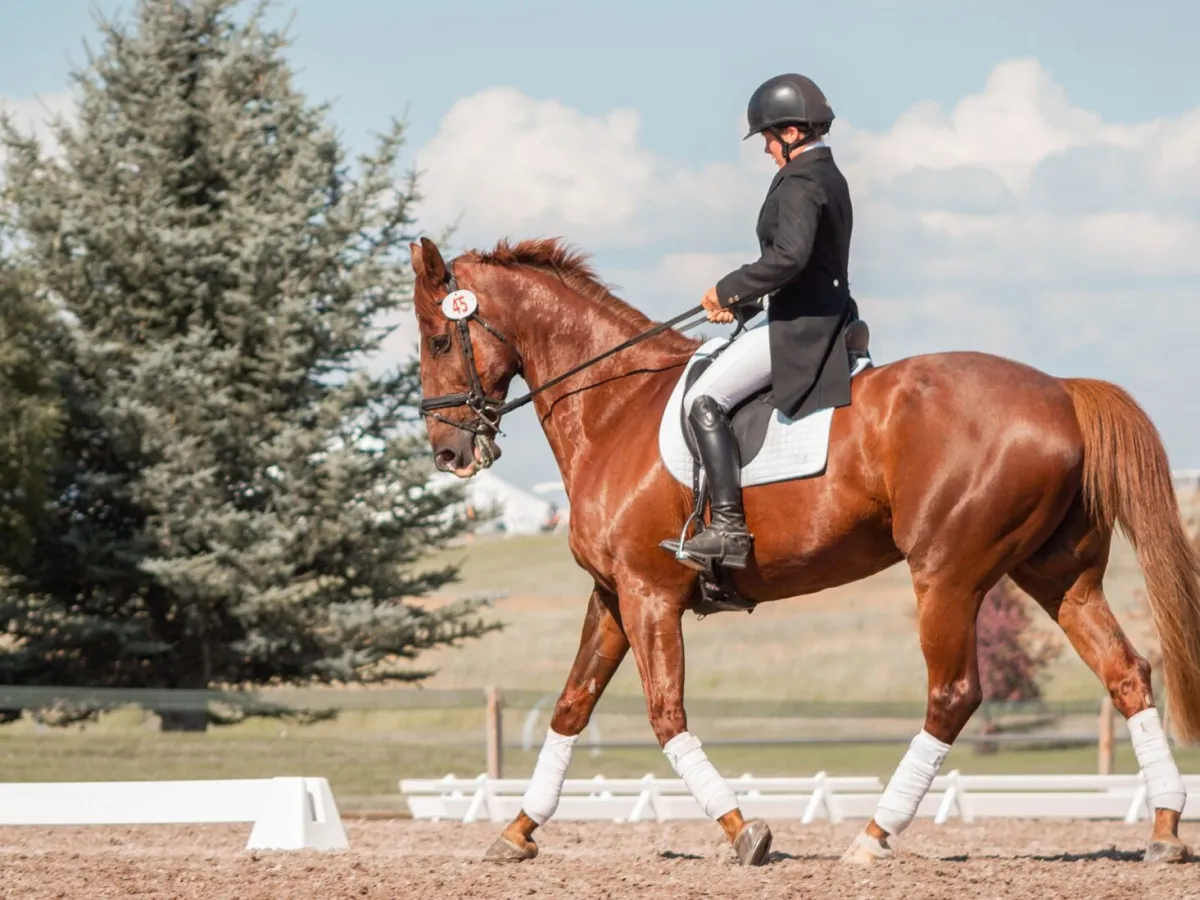 Photo: HorseBack UK, via luxurylondon.co.uk
For women who already have horses in their lives, the menopause years often see the relationship take on new significance.
"I've had horses all my adult life, but during menopause they became something different," says Gill, 56, from Yorkshire. "Horses pick up on your emotional state — they mirror it back to you. Spending time with them forced me to calm down, to be present, because if I came to them anxious they'd be anxious too. It was the best mindfulness practice I ever did, and I didn't have to sit on a cushion."
Dogs, meanwhile, offer a specific practical benefit that shouldn't be underestimated: they require walking. For menopausal women for whom exercise is genuinely therapeutic — reducing hot flushes, improving mood, supporting bone health, and aiding sleep — having a dog is one of the most effective behavioural nudges that exists. You might not drag yourself off the sofa for your own sake. You'll do it for theirs.
"My GP told me to exercise more," says Diane, 50, from Cardiff. "And I knew she was right, but I couldn't make myself do it. Then we got Bertie. Now I walk four miles a day without thinking about it. My mood has improved more than anything else I've tried."
A Note on What Pets Can't Do
It's worth being honest here. A cat or a dog is not a substitute for HRT, for therapy, for medical assessment, or for genuine human support. If you're struggling significantly with menopause symptoms — physically or mentally — please do talk to your GP. Pets are a complement to care, not a replacement for it.
They're also, of course, a responsibility. Anyone considering getting a pet specifically for emotional support should think carefully about the practical commitment involved, particularly at a time when energy and capacity may already be stretched.
But for women who already share their lives with animals, or who are in a position to do so, the evidence is increasingly clear: the relationship is doing more for your health than you might have realised.
The Simplest Form of Support
Menopause can make the world feel very loud and very indifferent. The symptoms are real, the healthcare system is overstretched, and the social script for midlife women remains stubbornly limited.
Into all of that, a warm animal who wants nothing from you except your presence offers something genuinely rare: simplicity. Uncomplicated comfort. The reminder that your body, however much it's frustrating you right now, is still capable of being soothed.
Barley the Labrador probably doesn't know he's a wellness intervention. But at 4am in Norfolk, for one woman in the middle of one of the harder stretches of her life, he was exactly what was needed.
Sometimes that's enough.