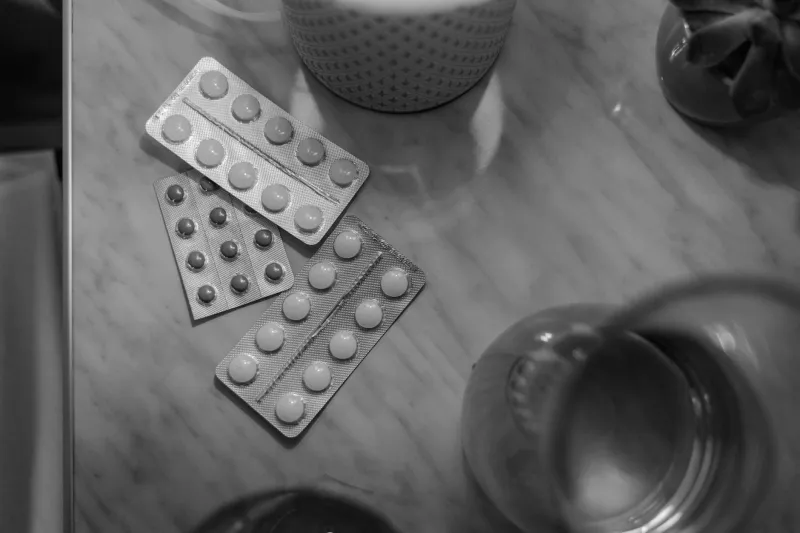
The Great HRT Experiment Begins
Sarah Matthews remembers the exact moment her GP handed her that first HRT prescription. "I felt like I'd won the lottery," she laughs, sitting in her Brighton kitchen eighteen months later. "Finally, someone was taking my symptoms seriously. I thought this little packet of patches would solve everything."
How wrong she was.
What followed was what Sarah now calls "the great HRT experiment" – a frustrating, expensive, and emotionally draining journey through different formulations, doses, and delivery methods that lasted eight months before she found what worked.
"Nobody prepared me for the fact that getting HRT right is like finding the perfect jeans," she explains. "What works brilliantly for your mate might be a complete disaster for you."
The Sticky Situation
Sarah's first prescription was for oestradiol patches – the gold standard, according to her GP. The theory was sound: steady hormone delivery, no daily pills to remember, and fewer side effects than oral options.
Reality was different.
"The patches wouldn't stick properly. I'd wake up with them half hanging off, or find them stuck to my pyjamas instead of my skin," Sarah recalls. "I tried every trick – different brands, prep wipes, even surgical tape around the edges. Nothing worked consistently."
Dr Emma Richardson, a menopause specialist at a London clinic, sees this scenario regularly. "Patch adhesion issues affect about 20% of women, but many GPs don't realise how common it is. Women often blame themselves, thinking they're applying them wrong."
The psychological impact was immediate. "Every morning became this anxious check – is it still on? How much hormone am I actually getting? I felt like I was failing at something that should have been simple."
Pills, Gels, and Growing Frustration
After three months of patch problems, Sarah's GP switched her to oral HRT tablets. The relief was short-lived.
"Within a week, I was nauseous every morning. Not just queasy – properly sick. My GP said it would settle, but after a month, I was dreading taking them."
The oral route also brought unexpected anxiety about timing. "I became obsessed with taking them at exactly the same time every day. If I was five minutes late, I'd panic about breakthrough bleeding or symptoms returning."
Next came oestrogen gel – a twice-daily application that seemed promising until Sarah's skin began reacting.
"Red, itchy patches appeared wherever I applied it. My husband joked I looked like I had a rash in the shape of Australia on my thigh," she says. "But it wasn't funny when you're already feeling rubbish about your body."
The Emotional Rollercoaster
What struck Sarah most was how each failed attempt felt like a personal rejection.
"Every time something didn't work, I felt like my body was being difficult. I'd read success stories online and wonder why I couldn't just get on with it like everyone else seemed to."
This emotional burden is something Dr Richardson recognises. "Women often internalise HRT failures as personal failings. The reality is that finding the right formulation is genuinely complex – we're dealing with individual metabolism, skin sensitivity, lifestyle factors, and personal preferences."
Sarah's lowest point came after her fourth failed attempt – a different patch brand that caused severe skin irritation.
"I sat in my car after the GP appointment and cried. I felt like I was running out of options, and my symptoms were getting worse. The brain fog was so bad I couldn't concentrate at work, and I was having panic attacks about my future."
The Turning Point
Sarah's breakthrough came through her own research and advocacy. After joining online menopause support groups, she learned about combination patches that include both oestrogen and progesterone.
"I printed out research papers and took them to my GP. I explained that I wanted to try the Evorel Conti patches, even though they were more expensive."
The difference was immediate.
"Within two weeks, my sleep improved. The brain fog lifted. My energy returned. It was like someone had turned the lights back on in my life."
But the real revelation was the psychological shift. "I realised that advocating for myself – doing my own research, asking specific questions – was part of the process. I wasn't a difficult patient; I was an informed one."
Questions That Made the Difference
Through her journey, Sarah developed a list of questions that she wishes she'd asked from the beginning:
- What are all the available delivery methods for my specific needs?
- If patches don't stick, what preparation techniques work best?
- How long should I try each option before switching?
- What are the signs that a formulation isn't working versus normal adjustment symptoms?
- Can you refer me to a menopause specialist if we can't find the right option?
"The key was being specific," Sarah explains. "Instead of saying 'the patches don't work,' I learned to say 'I'm experiencing adhesion problems despite following all preparation advice, and I'd like to try a different delivery method.'"
The Ripple Effect
Eighteen months later, Sarah's life has transformed. Her career is back on track, her relationship with her husband has improved, and she's sleeping through the night.
"But the biggest change is my confidence," she reflects. "Going through that process taught me to trust my instincts about my body and to speak up when something isn't working."
She's now a vocal advocate for HRT education, sharing her experience with friends and colleagues.
"I tell every woman starting HRT that it might take time to get right, and that's completely normal. The first prescription might not be your last, and that doesn't mean you're doing anything wrong."
The Bigger Picture
Sarah's experience highlights a crucial gap in HRT provision across the UK. While access remains patchy, even women who can access HRT often aren't prepared for the reality of finding the right formulation.
"We need better education about the trial-and-error process," argues Dr Richardson. "Women should understand from the start that finding the right HRT is often a journey, not a destination."
For Sarah, that journey was worth every frustrating moment.
"I wish I'd known it wouldn't be straightforward from the beginning. But I also know that the relief when you find your formula is incredible. Don't give up – your perfect prescription is out there."